How Often Do Brands Change Their Facebook Ads?
There is no single number for how often brands change their Facebook ads: it depends on how much they spend, which formats they run and how quickly their creatives wear out. A brand spending heavily to a narrow audience may refresh constantly, while a small advertiser might leave the same ad live for months because it keeps working.
So the useful question is not "how often do brands change ads" in general. It is "how often does this competitor change theirs, and what does that tell me?" That you can measure yourself, for free, in an afternoon. This post covers what drives the cadence, how to measure it, the patterns you will see, and what it means for your own account.
Why is there no single answer?
Because ad refresh is driven by a few forces that differ from brand to brand.
Spend. The more a brand spends against the same audience, the faster that audience sees each ad again and again. Higher frequency means faster fatigue, which means more need for fresh creative. A small budget spread across a broad audience can keep one ad fresh much longer.
Audience size. A national brand selling a mass-market product has a huge pool of people who have never seen its ads. A niche B2B advertiser targeting a narrow job title runs out of new eyes quickly.
Format. Short video and static images tend to be cheaper and faster to produce than polished long-form video, so brands that lean on them can afford to test more. A brand running expensive productions has a reason to keep each one alive longer.
Creative fatigue. Every ad eventually stops performing as well because the people seeing it have already seen it. When and how that happens varies by product, offer and audience. Our explainer on what creative fatigue is covers the signs.
Team capacity. This one gets ignored. Some brands change ads rarely simply because nobody has time to make new ones, not because the old ones are still winning.
How can you measure how often a competitor changes their ads?
The Meta Ad Library gives you everything you need. Every active ad shows a "Started running on" date. If you look at a competitor's ads at regular intervals and log those dates, you can see their launch rhythm and which ads last.
Here is the method I use.
Step 1: Pick the competitor and set the filters
Open facebook.com/ads/library, choose the country you care about and the "All ads" category, then search the brand's page name. Filter to active ads. If the brand runs several pages, note each one, since a brand can split its ads across pages. If the brand is hard to find, check our guide to how many ads a competitor is running, which covers counting ads across pages.
Step 2: Take a baseline snapshot
Record every active ad with its start date and a short description: format, hook, offer. A spreadsheet with one row per ad works fine.
How I do this step: I use our free extension, the Meta Ad Library Downloader, to save the whole search into one ZIP. It includes a CSV of every ad and files named by advertiser and date, which makes the next snapshot easy to compare. If you prefer a different method, our pillar guide on how to download Facebook Ad Library videos covers the options. Saving matters because outside the EU an ad drops out of the Library once the brand stops it, so you cannot go back later and check.
Step 3: Repeat weekly for a month or more
Same day each week, same filters. For each snapshot, note three things:
- New ads: any start date after your last snapshot.
- Stopped ads: any ad from last week that has gone.
- Survivors: ads still running from your baseline.
Step 4: Read the numbers
After four or more snapshots, you will have a rough picture of their weekly launch count, how long a typical new ad survives, and which ads have lasted the whole period. That is their refresh cadence, measured rather than guessed.
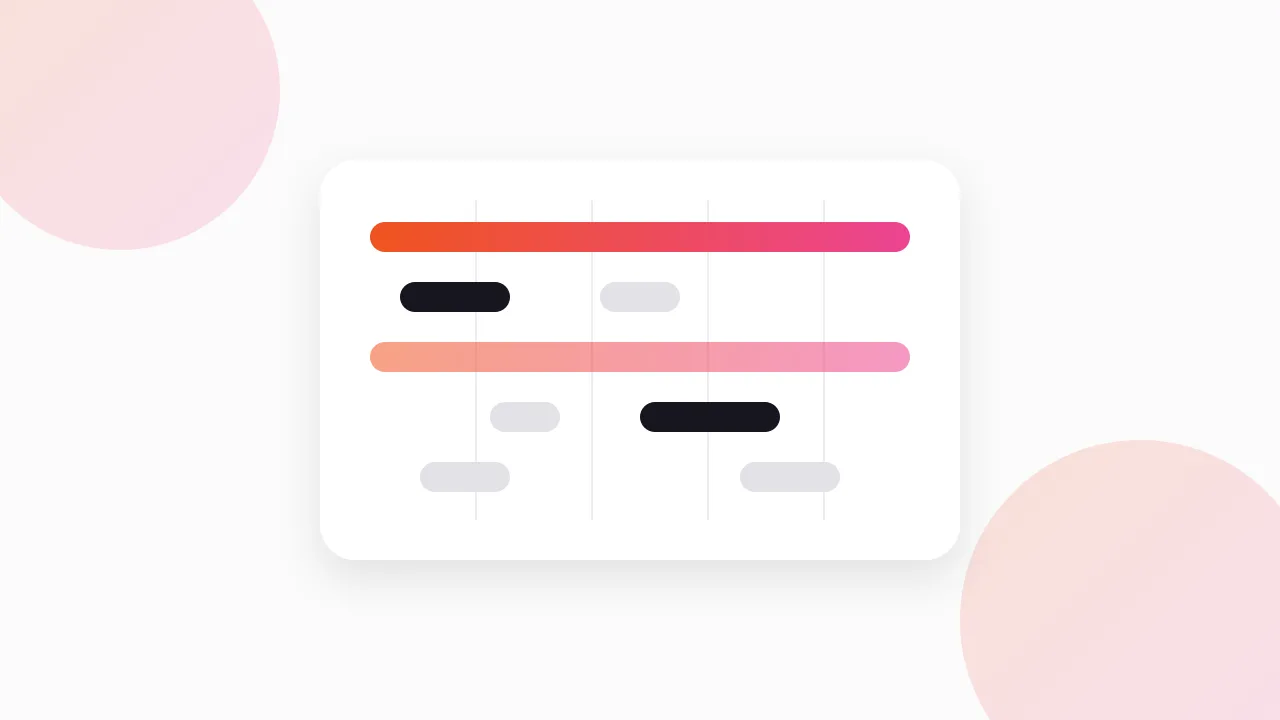
For a fuller tracking setup, see our guide on how to track competitor ad changes, and if you want a calendar view of when they launch, our competitor ad calendar template lays it out by week.
What patterns will you see when you measure?
After tracking a handful of brands this way, the same shapes tend to show up.
Evergreen winners alongside a churn of tests
This is the most common pattern among active advertisers. A small group of ads keeps running week after week, sometimes for months. Around them, new ads appear and disappear quickly.
The long runners are usually the winners. Advertisers keep paying only for ads that work, so an ad that survives every snapshot is a strong signal. The short-lived ones are mostly tests that did not beat the control. Our post on Facebook ad longevity explains how to read this signal and where it misleads.
So when someone asks how often a brand changes its ads, the honest answer is often "both rarely and constantly". The core barely changes. The testing layer changes all the time.
Seasonal spikes before sales
Watch any retail brand through a big sale period and you will usually see a burst of new start dates in the days or weeks before it. Black Friday, end-of-season sales, product launches and holidays all tend to bring a wave of offer-led ads. After the sale ends, many of those ads stop and the evergreen set carries on.
If you log this over a year, you learn not just how often a brand refreshes, but when. That is useful for planning your own promotions.
Big brands launching in batches
Larger advertisers often launch several ads on the same date: one concept cut into different lengths, ratios or hooks, or a set of variations testing one idea. In your log this looks like a cluster of identical start dates, then a quiet week, then another cluster.
Do not read a batch of ten as ten separate ideas. Look at them together. Often it is one angle being tested many ways.
Quiet accounts
Some brands barely change anything. A few ads run for a long time, with an occasional new one. This can mean those ads are working well. It can also mean a small budget or a stretched team. Longevity alone cannot tell you which, so treat quiet accounts as a hint, not proof.
Sudden overhauls
Occasionally a brand stops most of its ads at once and launches a new set. That usually points to a rebrand, a new offer, a new agency or a change of strategy. When you see it, save the new set and watch which survive. That is a live view of their new direction.
What does a competitor's cadence tell you?
Quite a lot, if you read it with care.
A high launch rate with short survival tells you the brand is testing hard. Their long runners are worth studying closely, because they beat a lot of internal competition.
A low launch rate with long survival tells you they have found something stable, or that they are not investing in creative. Look at the long runners either way.
A spike before a known date tells you their promotional calendar. If you sell into the same window, you know when the auction will get more crowded with their offers.
What it cannot tell you is their spend or results. The Ad Library does not show spend or engagement for normal commercial ads, so cadence is an indirect signal. Pair it with what the ads actually say, which our guide on how to track competitor ad changes touches on.
How often should you change your own Facebook ads?
Let your own data set the pace, and use competitors for ideas, not schedules.
Your refresh rhythm should come from your own fatigue signals: frequency climbing, click-through rate sliding, cost per result rising on an ad that used to work. When those show up, it is time for new creative. If an ad is still performing, there is no prize for replacing it early.
A practical structure that many media buyers use:
- Keep proven winners running while they hold up.
- Add a steady stream of tests at a pace your team can sustain and your budget can give a fair read.
- Plan bursts ahead of your own sales and seasonal moments.
- Retire ads on evidence, not on a calendar.
Our guide on how often to launch new Facebook ads goes into testing cadence in more depth.
Where competitor tracking helps is in the content of your tests. If a rival's long runner leans on a specific angle, that is a hypothesis worth testing with your own product, footage and voice. Copy the angle, never the asset. Do not reuse another brand's creatives commercially. This is general guidance, not legal advice.
FAQ
How often do brands change their Facebook ads?
There is no single answer. It depends on spend, audience size, format and how quickly creatives fatigue. Many active brands keep a few long-running winners live for months while launching and stopping test ads every week.
How can I see when a competitor launched a new ad?
Open the Meta Ad Library, search the brand and filter to active ads. Each ad shows a "Started running on" date. Log those dates weekly and any date after your last check is a new ad.
Do big brands change ads more often than small brands?
Often, yes, because bigger budgets reach the same people more often and fatigue creative faster, and larger teams can produce more variations. But it varies a lot, and some large brands run the same winners for a long time.
Why do some ads run for months without changing?
Usually because they keep working. Advertisers keep paying only for ads that perform, so a long-running ad is often a winner. Sometimes it simply reflects a small budget or a team without time to refresh, so treat longevity as a strong hint rather than proof.
How often should I change my own Facebook ads?
Change them when your own data shows fatigue, such as rising frequency, falling click-through rate or rising cost per result. Keep winners running while they hold up and add new tests at a pace your team and budget can sustain.
The Klipio extension adds a download button to every ad in the Meta Ad Library: one click per ad, or bulk-save a whole search as a ZIP with a searchable swipe file inside. Free, no sign-up.
Get the free Ad Library downloaderKlipio reads a competitor's live Meta ads, ranks them by how long they have been running — the honest signal that an ad is profitable — and turns the winning angle into on-brand creative for your own brand. 3-day free trial.
Start free — 3-day trial →