
What Is the Meta Conversions API?
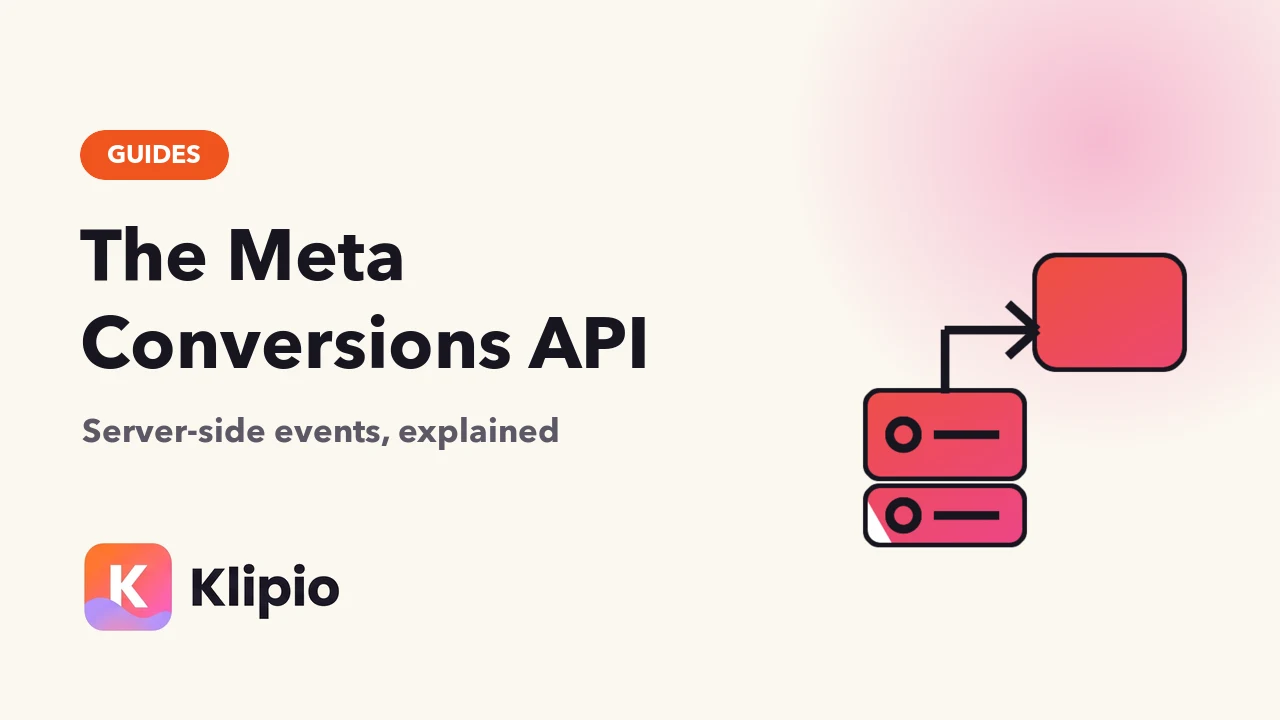
The Meta Conversions API, usually called CAPI, is a server-side connection that sends conversion events straight from your website's server to Meta, instead of relying on the browser. It exists because browser tracking now loses a meaningful share of events, and Meta's optimisation gets worse when it cannot see what happened.
It is not a replacement for the Meta pixel. The two are meant to run together, reporting the same events from two different places.
Why did the pixel stop being enough?
Because the browser is no longer a reliable messenger.
The pixel is JavaScript running in your visitor's browser. Three things interrupt it:
- Ad blockers stop the script loading at all.
- Browser privacy defaults, particularly in Safari and Firefox, limit what third-party scripts can store and send.
- App tracking prompts on iOS, where a user who declines cuts off a large part of what the browser could previously report.
None of that affects your server. Your server knows an order was placed because it processed the order. Sending the event from there is simply more dependable.
How does the Conversions API work?
Your server posts an event to Meta whenever something worth counting happens.
The event carries three kinds of information:
- What happened — Purchase, AddToCart, Lead, and the value and currency.
- Who it was, as hashed identifiers — email, phone, and similar, hashed before they leave your server.
- When and where — a timestamp, the page, and the click identifiers that link the event back to an ad.
Meta matches that against the people who saw or clicked your ads and attributes the conversion. The matching quality is entirely dependent on how many identifiers you send.
What is deduplication and why does it matter?
It stops one purchase being counted twice.
If the pixel fires a Purchase and your server sends the same Purchase, Meta sees two events. Without instruction, it reports two sales for one order, your ROAS looks inflated, and your optimisation learns from fabricated volume.
The fix is a shared identifier. Both the pixel event and the server event carry the same event_id and the same event name. Meta sees them, recognises the pair, and keeps one.
Getting this wrong quietly corrupts every downstream decision, because the campaigns you scale are chosen on numbers that are no longer real. How attribution windows and reported conversions relate is covered in Facebook ads attribution explained.
What are the four ways to set it up?
From easiest to most work:
| Method | Effort | Best for |
|---|---|---|
| Platform integration | Minutes | Shopify, WooCommerce, and similar |
| Partner or tag manager | An hour or two | Sites already using a tag manager |
| Conversions API Gateway | Moderate, hosted | Teams without developers |
| Direct API | Developer work | Custom stacks and full control |
Platform integration is a toggle on most major ecommerce platforms. If you are on one, use it, and be done.
A tag manager setup gives more control over which events fire and what they carry, at the cost of somebody maintaining it.
The Gateway is Meta's hosted option for teams who want server-side events without writing code.
Direct implementation is the right answer only when your stack is unusual or you need events the standard integrations do not send.
What is event match quality?
A score from 0 to 10 in Events Manager showing how well Meta can match your events to real people.
It rises with the number and quality of identifiers you send. Email and phone carry the most weight. Name, city, postcode, and the click identifiers add to it.
Practical guidance:
- Below 5 — a lot of your events are not being matched, so your optimisation is running on partial data.
- 6 to 7 — normal for a standard ecommerce setup.
- 8 and above — good, usually meaning you are sending hashed email on most events.
The easiest single improvement is passing hashed email on more events, which for most stores means sending it on checkout steps rather than only on purchase.
Does CAPI actually improve results?
Usually yes, and for a reason people misread.
The obvious benefit is reporting. More conversions get recorded, so your ROAS in Ads Manager looks closer to what your own back end says.
The bigger benefit is optimisation. Meta's delivery system learns from the conversions it can see. When it sees more of them, it finds buyers more accurately, and ad sets get through the learning phase on fewer wasted impressions.
Two honest caveats. It will not rescue a weak offer. And the lift varies a lot by traffic mix, because a store whose visitors are mostly on iOS Safari has far more to recover than one whose visitors are mostly on Android Chrome.
What should you check after setup?
Four things, in the first week:
- Events Manager shows both sources for each event — browser and server.
- Deduplication is working. Look for the deduplication indicator, and compare total purchases against your store's own order count.
- Event match quality is above 5, and climbing as you add identifiers.
- Values are correct. Currency and order value must match your store, or every ROAS figure is wrong by a constant factor.
Then leave it alone for a fortnight. Attribution shifts after a tracking change, and reading week-one numbers against week-zero numbers compares two different measurement systems.
While that settles, spend the time on creative instead. Competitor research costs nothing: the Meta Ad Library is free, shows every active ad worldwide, and dates each one. Our free Meta Ad Library downloader saves those ads before they are paused, since the library keeps nothing.
The rest of the measurement stack is in how to measure Facebook ad performance.
FAQ
Do I still need the Meta pixel if I have the Conversions API?
Yes. Meta recommends running both. The pixel captures browser-side signals the server does not have, and the two together produce better matching than either alone.
Will the Conversions API double-count my conversions?
Only if deduplication is not set up. Both events must share the same event name and the same event ID so Meta can recognise them as one conversion and discard the duplicate.
Is the Conversions API free?
Yes. It is part of Meta's advertising tools at no extra cost. You may pay for a partner integration, a developer's time, or hosting for the Gateway, but the API itself has no fee.
What is a good event match quality score?
Six to seven is normal for a standard ecommerce setup, and eight or above is good. Below five means a large share of your events are not being matched to people, which weakens optimisation.
Does CAPI work for lead generation, not just ecommerce?
Yes. Lead, CompleteRegistration, and custom events work the same way, and CRM-stage events sent server-side are one of the stronger uses of the API for lead businesses.
How long until the Conversions API affects performance?
Allow two weeks. Reported conversions usually shift within days, but delivery needs time to learn from the fuller data before the change shows up in cost per acquisition.
The Klipio extension adds a download button to every ad in the Meta Ad Library: one click per ad, or bulk-save a whole search as a ZIP with a searchable swipe file inside. Free, no sign-up.
Get the free extensionKlipio reads a competitor's live Meta ads, ranks them by how long they have been running — the honest signal that an ad is profitable — and turns the winning angle into on-brand creative for your own brand. 3-day free trial.
Start free — 3-day trial →