
Competitor Analysis for Digital Marketing: A Framework
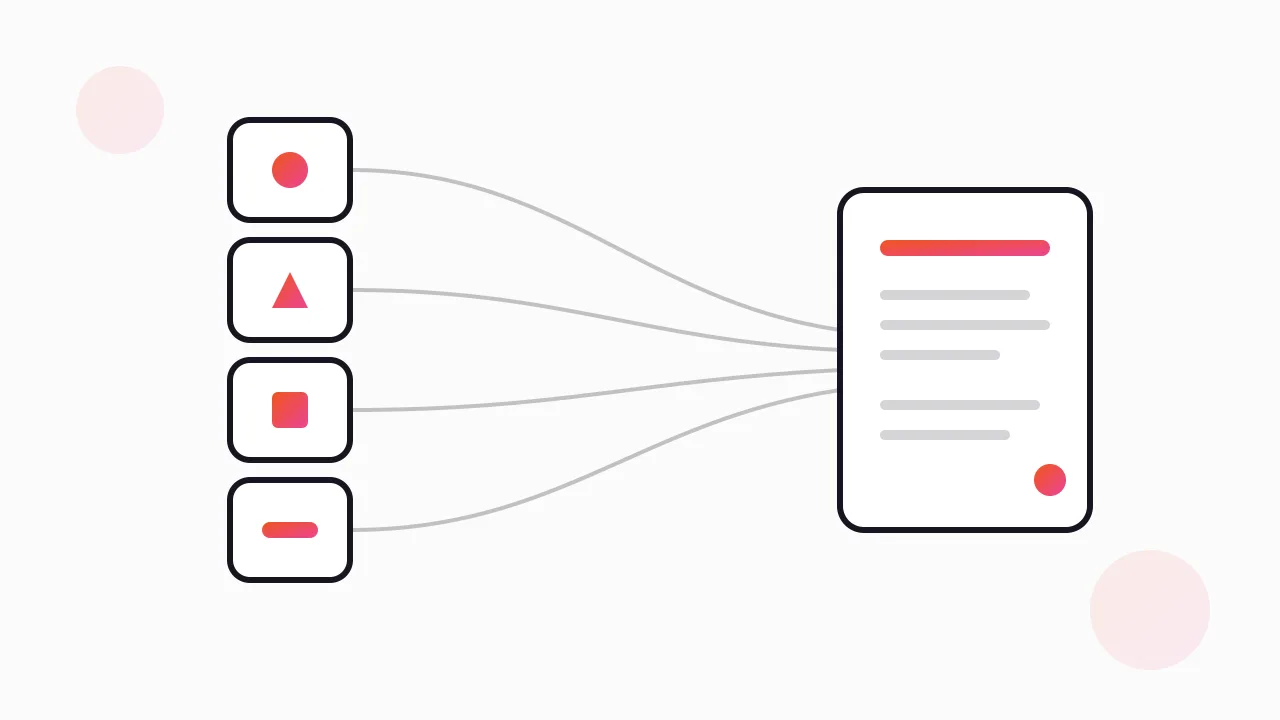
To do a competitor analysis for digital marketing, pick five real competitors, then check each one across the same channels: their website and offer, their search presence, their Meta ads, their Google ads, their social content, their emails and their customer reviews. You finish by writing what you found on a single page, with the gaps you can attack and the moves you will copy in spirit.
That is the whole framework. The rest of this post is how I actually run each step, what to look for, and where people waste time. I have done this for brands across ecommerce, apps and local services, and the process barely changes.
Who should you include in a digital marketing competitor analysis?
Not the brands you already worry about. That is the most common mistake, and it quietly ruins everything after it.
Your business competitors are the companies that sell something similar. Your digital marketing competitors are the companies taking your customer's attention online: the ones in their feed, on the search results page, in their inbox. Those lists overlap, but they are rarely the same.
I search for what my customer wants, not for brand names. I type the problem into Google and note who ranks and who runs ads. I search the same words in the Meta Ad Library and note who is advertising against them. Our guide on how to identify your real competitors walks through this in detail, including how to filter down to advertisers that sustain ads for weeks.
What should you look at on a competitor's website and offer?
Start here because everything else points to it. Every ad, post and email is trying to get someone to a page and make an offer.
For each competitor I write down five things:
- The main promise. What does the homepage headline say they do, in their words?
- The offer. Price, bundles, free trial, guarantee, free shipping threshold, first-order discount.
- Pricing structure. Monthly versus one-off, tiers, what is gated behind the higher plan.
- Proof. Reviews, logos, press mentions, numbers they put up front.
- The path to buy. How many clicks from homepage to checkout, and what they ask for along the way.
I also look at the pages their ads point to, not just the homepage. Ads often go to a dedicated landing page with a sharper offer than the main site. Our post on finding competitor ad landing pages shows how to trace an ad to its real destination.
Screenshot everything and date it. Offers change, and next quarter you will want to know what changed.
How do you analyse a competitor's SEO without paid tools?
You can get a surprising amount from Google itself.
Search the problems your customer types, the "best X for Y" queries, the "X vs Y" queries and the "how to" questions in your category. Note which competitors show up, which pages rank, and what kind of page it is: a blog post, a comparison page, a product page or a free tool. That tells you what Google thinks deserves to rank for those searches.
Then open the ranking pages and read them like a customer. How long are they, what questions do they answer, how recently were they updated, and do they link to a product?
A site search, typing site:competitor.com plus a topic, shows how much content they have on that subject. Google's Keyword Planner gives rough search volume ranges for free with a Google Ads account.
Paid SEO platforms add backlink data, estimated traffic and keyword gap reports, and they are worth it if search is a major channel for you. For a first pass, you do not need them. You need to know which topics competitors own and which ones nobody has answered well.
How do you see a competitor's Facebook and Instagram ads?
Use the Meta Ad Library at facebook.com/ads/library. It is free, run by Meta, and shows every active ad from any advertiser worldwide, on Facebook, Instagram, Messenger and Audience Network. No login is needed to browse.
Search the competitor's Page name, set the country and ad category, and you see every ad they are currently running. Each card shows a "Started running on" date, and that date is the most useful free signal you will get. Advertisers keep paying only for ads that work, so an ad that has run for months is usually a winner, and a pile of ads that started last week is a test.
What I log for each competitor's ads:
| Field | What to note |
|---|---|
| Hook | The first line of copy or first three seconds of video |
| Angle | The reason to buy: price, results, identity, fear, convenience |
| Format | Video, static image, carousel, UGC, founder-led |
| Offer | Discount, bundle, trial, free shipping |
| CTA and landing page | Button text and where it goes |
| Start date | How long it has been running |
The Library has no download button, and ads disappear the moment the advertiser stops them. Here is how I do it: I use our free extension, the Meta Ad Library Downloader, which adds a Download button to each ad and has a bulk mode that saves a competitor's whole set of running ads into one ZIP with a searchable swipe board and a CSV. Screen recording works too, at lower quality. Our pillar guide to downloading Facebook Ad Library videos covers every method.
For the deeper ad-by-ad process and a template, see our competitor ad analysis guide.
How do you check a competitor's Google Ads?
Go to Google's Ads Transparency Center at adstransparency.google.com. It is Google's equivalent of the Meta Ad Library: search an advertiser and you see their search text ads, display banners, YouTube video ads and Shopping ads, filterable by region, date and format, without an account.
What it won't show you is keywords, bids or spend for normal commercial advertisers. So I combine it with the SEO step. If a competitor runs search ads on a query you also rank for organically, that query probably makes them money.
Our guide on checking competitors' Google ads covers the filters and a shortcut from any live ad straight to the advertiser's page.
What should you look for in a competitor's social content?
Organic social is where brands test messages cheaply, so it often previews what shows up in ads later.
I look at the last 30 to 60 days of posts on whichever two platforms matter most in the category. I am not counting followers. I am looking for which posts get comments that sound like real customers, which formats they repeat, and which topics they keep coming back to. Repetition is a signal. Brands repeat what works.
Pay attention to the comments too. Questions people ask under a competitor's posts are objections their marketing has not answered yet. Those are openings for you.
Why should you sign up for competitors' emails?
Because email is the one channel you can't see from the outside. You have to be on the list.
I use a separate inbox, sign up through each competitor's main popup, and if it makes sense, abandon a cart. Over a few weeks you see their welcome sequence, how fast they discount, how often they send, what subject lines look like, and how they handle an abandoned checkout.
Note the timing and the first offer. A brand that discounts in the first email is teaching customers to wait for a code. A brand that leads with education and holds the offer for later is playing a longer game. Neither is wrong, but you should know which one you are up against.
How do customer reviews fit into a competitor analysis?
Reviews are the most underrated source in this whole process. They are customers telling you, in their own words, what they wanted and whether they got it.
I read competitor reviews on their site, on marketplaces, on app stores or on review platforms, depending on the category. I focus on the three-star reviews, because they are usually the most balanced. I copy exact phrases into a doc under two headings: what people love and what people complain about.
The complaints become your positioning. If three competitors get the same complaint about slow shipping, confusing setup or a product that breaks, and you have solved it, that is your headline. The praise tells you what the category must deliver just to be considered.
How do you turn all this into a one-page competitor analysis?
This is the step people skip, and it is the one that makes the work useful. Nobody acts on a 40-tab spreadsheet. They act on a page.
My one-page doc has five sections:
- The five competitors, one line each on who they are and how they win.
- Patterns across all of them. The angles everyone uses, the offers that keep repeating, the ads that run longest.
- Gaps. Customer complaints nobody solves, questions nobody answers in search, formats nobody uses in ads.
- What we will test, three to five specific moves, each tied to evidence from the analysis.
- What we won't copy, and why.
Keep the raw material, the screenshots, ad files and review quotes, in a folder linked from the page. Then set a reminder. Ads and offers change monthly, so I re-check ads monthly and redo the full analysis each quarter. Our guide to building a competitor ad watchlist turns the ads part into a weekly habit.
One rule throughout: copy the angle, not the asset. Learn why a competitor's ad, page or email works, then build your own version. Reusing their actual creative or copy can raise copyright and trademark problems. This is general guidance, not legal advice.
FAQ
How do you do a competitor analysis for digital marketing?
Pick five competitors who win your customer's attention online, then review each one's website and offer, search presence, Meta ads, Google ads, social content, emails and reviews. Summarise the patterns, gaps and tests on one page.
How many competitors should I analyse?
Five is the sweet spot for most businesses. Two direct rivals, two who compete for attention with a different product, and one brand a level above you gives enough range without drowning you in data.
What free tools can I use for online competitor analysis?
The Meta Ad Library shows every active Facebook and Instagram ad, and Google's Ads Transparency Center shows Google search, display and YouTube ads. Google search itself, Keyword Planner, competitor newsletters and public reviews cover most of the rest.
How often should I redo a competitor analysis?
Check competitor ads monthly, because ads change fastest. Redo the full analysis every quarter, or sooner if a new competitor appears or your results shift suddenly.
What should a competitor analysis document include?
A short profile of each competitor, the patterns you see across all of them, the gaps you can exploit, and a short list of specific tests. Keep it to one page and link the raw screenshots and files separately.
The Klipio extension adds a download button to every ad in the Meta Ad Library: one click per ad, or bulk-save a whole search as a ZIP with a searchable swipe file inside. Free, no sign-up.
Get the free Ad Library downloaderKlipio reads a competitor's live Meta ads, ranks them by how long they have been running — the honest signal that an ad is profitable — and turns the winning angle into on-brand creative for your own brand. 3-day free trial.
Start free — 3-day trial →